
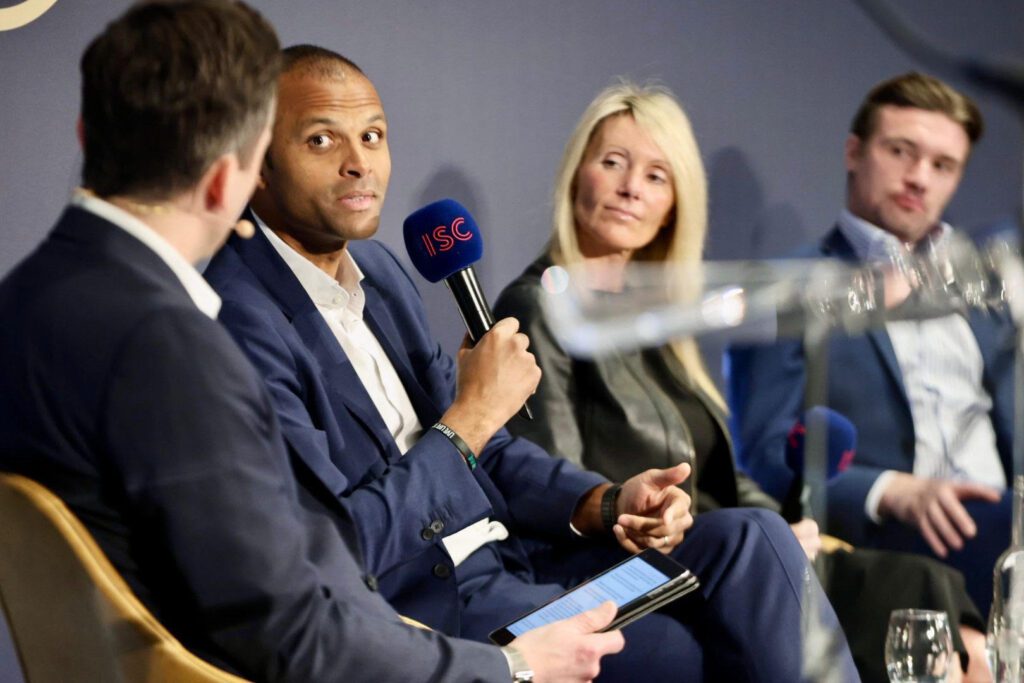
Maheta Molango – Chief Executive Officer – The PFA
Louise Skinner – Partner – Morgan Lewis
Michael Leahy – Manager, Strategy & Industry Intelligence, Men’s Football & Player
IQ – FIFPRO
Grégory Dupont – President – Felis Performance
The elite football calendar is getting busier every year.
As the world’s most popular sport seeks new sources of growth, tournaments have expanded to offer higher volumes of games to broadcast and commercial partners. The result is a player workload that has become increasingly difficult to sustain or defend.
As PFA chief executive Maheta Molango argued, that fundamentally affects the quality of the on-field product. Star names miss key fixtures through injury, or underperform through fatigue, but fans are still expected to pay for tickets and pay-TV subscriptions.
This is incubating deeper problems within the sport as well, warned FIFPRO’s Michael Leahy. The increased regularity with which players are expected to appear every three to four days – rather than once a week – is placing unacceptable mental and physical demands on players that could shorten careers and create long-term damage.
At the same time, Molango adds, over-supply of product is also straining the media rights market, with limited broadcaster budgets allocated to an ever-greater number of fixtures.
With FIFA World Cup qualifiers moving into a definitive phase, Felis Performance’s Gregory Dupont pointed to the friction between club and international football.
This includes a heightened risk of serious injury due to additional games and travel, along with misaligned calendars that can lead to players appearing more often in a condensed period. But there are also issues of care at hand, with club and national medical staff each incentivised to ensure players are available for their team.
Lucrative pre-season tours and friendlies carry their own hazards, Dupont added, from long-haul travel to unsuitable facilities.
FIFPRO is campaigning for properly enforced safeguards, including four-week summer breaks that allow for full rest and recovery as well as restorative pre-season training. It is also exploring the possibility of a period in which players will have the ‘right to disconnect’ from their clubs.
The job of clearing that space is complicated by the influence of multiple stakeholders. As Molango argued, FIFA, UEFA and domestic leagues and associations might all be leaving adequate space in the calendar on an individual basis but taken together, their tournaments add up to record levels of player commitment.
Louise Skinner, a partner at global law firm Morgan Lewis, also noted how the presence of those multiple rights holders clouds questions of accountability when it comes to player welfare. A players’ body looking to raise a legal case, for example, would not have a clear answer as to who that should be brought against.
She cited the power of athletes’ unions in the US as a possible feature in the future landscape of global football. Molango concurred, emphasising a shift in player attitudes. While the role of unions, he conceded, is a challenging one in the existing governance context, the current generation of players has a better understanding than ever of their value and centrality to the product.
With players introduced to an industrialised talent system at ever younger ages, the expectation of better safeguards is only likely to grow. But looking ahead to an unprecedented 48-team FIFA World Cup – which follows a season in which stars like Arsenal’s Declan Rice might have made up to 68 appearances – Molango argued again for a re-evaluation of what makes football matter to its fans.
It was time, he said, for the sport to “rediscover the value of scarcity” and give its brightest talents the right conditions to perform.