
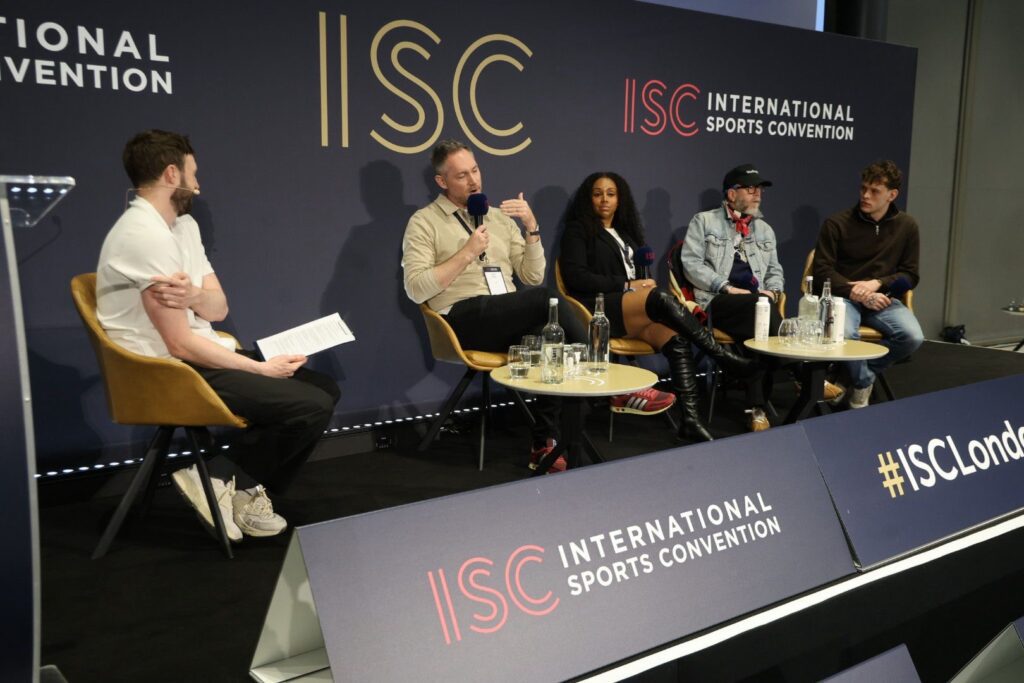
Matt McKie – VP Marketing – 2K
Owen Laverty – Chief Brand Officer – Ear to the Ground
Noah Bernard – Senior Vice President, Endura – Pentland Brands
Christina Taylor – Founder – Purpose Agency
Matt Richards – 2x Olympic Champion, Founder & CEO – Sponza
The Los Angeles 2028 Olympic Games promise to showcase huge cultural and commercial shifts in the sports industry.
In one of the media capitals of the world, brands and personalities will come to the fore in ways that could take Olympic storytelling in unexpected directions. Yet the unique commercial conditions that surround the Games – not least for its athletes – will be the source of fresh challenges as well.
An ISC 2026 session on the main stage looked at these topics through the lens of sponsors and Olympians alike. For 2K’s Matt McKie, the emerging media moment is one in which brands must finally start to grasp the potential value of relevance over straightforward visibility.
The much-travelled marketing executive – who also sits on the board of English football club Stockport County – believes a multi-channel attention era is one in which both parties in a sponsorship should bring out something valuable in the identity of the other.
As Pentland Brands’ Noah Bernard suggested, the challenge for brands in the sports space is how they express their values in the stories they want to tell. He saw this appearing in an intuitive context at Paris 2024, where Samsung’s integration of its smartphones into medal ceremonies showed how its products capture moments and memories.
Forging the right partnerships at an athlete level can be a trickier proposition. Sponza’s Matt Richards – an Olympic swimming gold medallist at Tokyo 2020 – pointed out that many brands engage in “golden periods” in the three months either
side of a Games. The three months before each event see sponsors work extensively with existing stars, while breakout favourites are rewarded with endorsement deals in the three months afterwards.
That limits the scope for brands to tell meaningful, valuable stories over a longer period of time, Richards added. And as McKie pointed out, post-Games deals signed by the most exciting performers – like Milan-Cortina figure skating champion Alysa Liu – have a shallower impact than those that carry narratives through the event.
For Purpose Agency founder Christina Taylor, brands also have to think differently to uncover the real value athletes bring to the creator economy. She noted that athletes have unusually complex public profiles, given the split between on-field performance and off-field personality. But she sees consistent and untapped potential in the latter, which partners can realise by treating athletes more like creators than traditional ambassadors.
That gives rise to other complications. Richards underlined the need for brands and rights holders to support athletes in balancing social media obligations with training and recovery. Taylor also noted the “huge knowledge gap” that can exist for athletes embarking on content creation, which brands should be ready to address as they begin designing activities with athletes.
That process of consultation is invaluable on every level. Reflecting on his time at Puma and the “joy” of working with Usain Bolt during the Beijing 2008 Olympics, Bernard stressed the significance of the “archaeological dig” into an athlete’s background and interests. By learning about their stories and motivations, brands can discover “the magic” and “the ideas” that ensure relevance, enable cut-through and produce returns on marketing spend.
There are, McKie conceded, often systemic issues that prevent some brands from “showing up authentically” in this way, from internal policies to a misalignment between short-term financial incentives and the longer-term commitment needed for marketing investments to pay off.
Still, heading into LA 2028, he said that brands must identify what makes them “special and differentiated”, and choose partnerships that portray those qualities in a compelling way.