
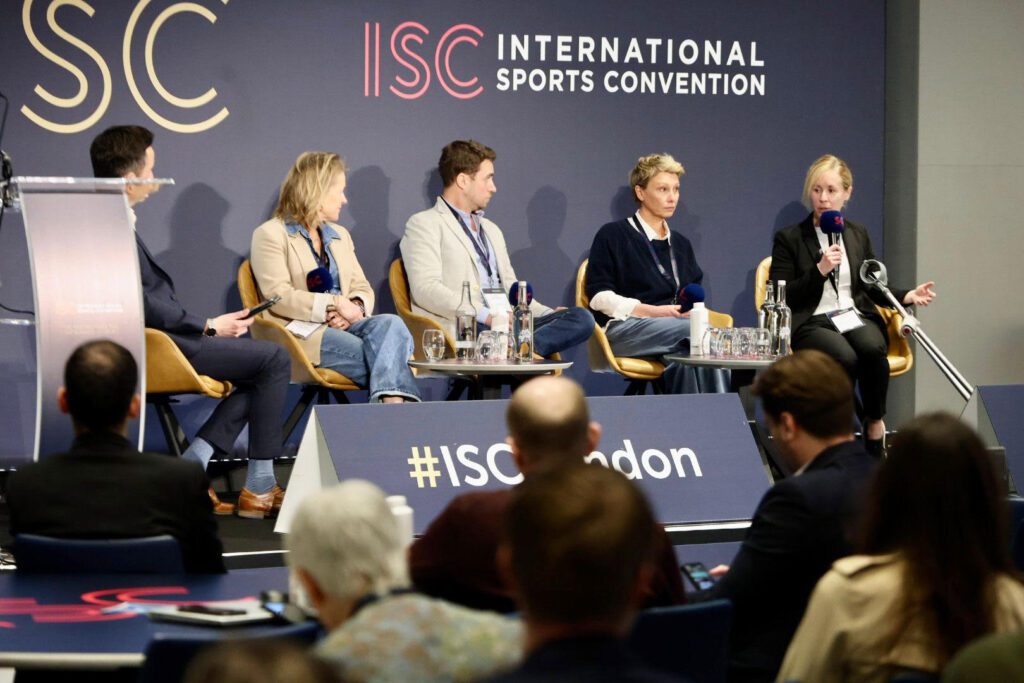
Marijn Vredendaal-Luchtman – Global Head of Sponsorships – Just Eat Takeaway.com
Tom Whiteside – Head of Group Sponsorship – Aviva
Donna Soane – Director of Global Sponsorship – Orange
Claire Gatcum – Senior Sponsorship Manager – Royal London
Brands took over the conversation for the second main stage session at ISC 2026, with a panel that asked how sponsors can cut through in an ever-busier sport and entertainment environment.
For any brand, using a sports platform to its full potential demands a level of pragmatic creativity.
As JustEat’s Marijn Vredendaal-Luchtman explained, any effort to reach audiences through sport must align closely with a brand’s commercial objectives, while also respecting the contractual restraints of rights partnerships.
Intuitive storytelling is also crucial. Aviva’s Tom Whiteside pointed to WhatsApp’s recent partnership with Formula 1 outfit Mercedes as an example of that in action. Its campaign made elegant use of the team’s smallest logo placement – the communications button on its steering wheel – alongside well-considered long-form content.
That approach helps create a throughline from brands to fan communities. According to Donna Soane, telecoms giant Orange sees its partnerships in sport as a way of addressing connectivity: tackling isolation and alienation by bringing people together.
That involves getting people active through sporting participation, as Orange did around the Paris 2024 Olympic Games. But it also means getting fans to think more deeply about the effects of their communication. That has inspired campaigns around digital inclusion, safety and responsible connectivity, centred on issues such as the online abuse of athletes.
For Claire Gatcum, Royal London’s sports sponsorship activities must express its role in helping customers build towards the future. When the Women’s Rugby World Cup captured the UK public’s attention last year, she recalled, many fans were asking what would come next.
Royal London is the lead sponsor of the first British and Irish Lions women’s team, who will play New Zealand in their debut series in September 2027. Crucially, Gatcum said, its support dates back to 2021, and was integral to the feasibility of the project in the first place.
Between digital channels, creator-led marketing and live experiences, the range of tools available to sponsors is broader than ever. Not every opportunity, however, is the right one.
Activations at in-person festivals, for example, make less sense for JustEat than some other brands. Vredendaal-Luchtman pointed to digital, community and personality-led content closer to matchday – and the big-game takeaway – as being more relevant.
Aviva, meanwhile, is a rights partner for a “diverse portfolio of sponsored venues” including Dublin’s Aviva Stadium. As Whiteside explained, this creates opportunities for a company without tangible physical products or a retail footprint to stay relevant to fans all year round. It is also a means of developing consumer relationships and data that support Aviva’s marketing needs.
In a crowded marketplace, brands should be wary of dead ends. An oversupply of content, Soane said, has created a “digital landfill” into which less relevant output can disappear. Meanwhile, Whiteside warned that fans have tired of “performative purpose”, and that campaigns must demonstrate the real and positive outcomes that would not have been possible without brand support.
For all that, Gatcum argued, brands who are brave in their support for what matters to fans and sports communities – and in their execution – can still land powerful messages and secure substantial returns.